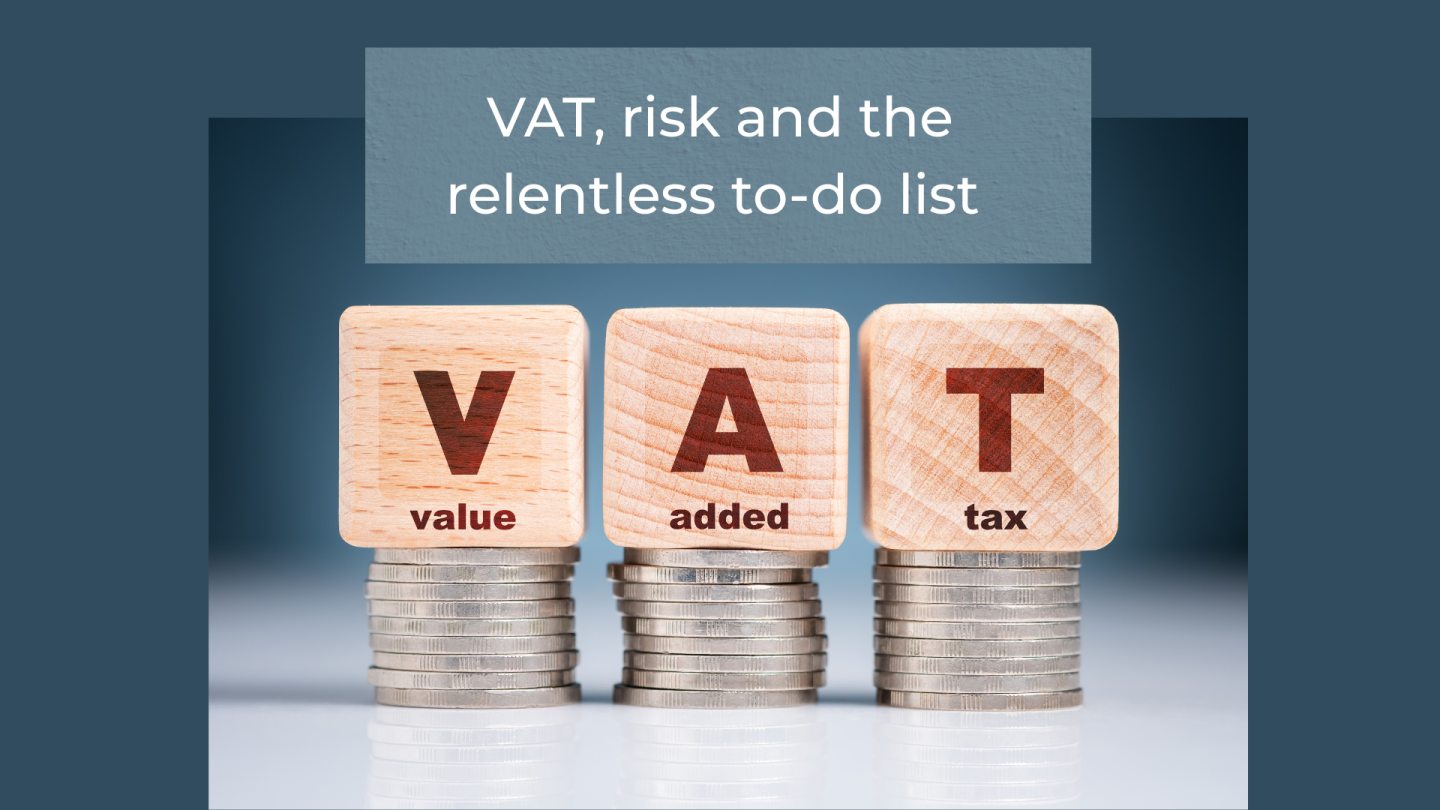
VAT, risk and the relentless to-do list

The role of the Bursar has always carried weight – but in today’s climate, that weight is increasing. As our latest research, The Art of the Bursar shows, Bursars across the UK independent school sector are facing mounting pressures, not just in terms of volume but in the breadth and intensity of the demands placed upon them. 

Financial stress is perhaps the most visible pressure point, in particular with the introduction of VAT on school fees. For many schools, this single policy change threatens to fundamentally reshape their operating models. But the financial challenge is compounded by a range of other operational and strategic issues. Rising payroll costs, inflationary pressures, and long-term affordability concerns have intensified the need for rigorous financial oversight, modelling and scenario planning. 

Yet finance is only the beginning. Bursars must also stay ahead of a rapidly evolving compliance landscape. In our research, compliance and regulation were described as not only one of the fastest-growing areas of responsibility, but also one of the most burdensome. From health and safety and safeguarding, to data protection, charity law, and increasingly complex HR regulation – the Bursar’s portfolio is increasingly regulatory by nature. It’s no surprise that strategic thinking and legal awareness are among the most in-demand skills in the role. 

HR, too, has taken centre stage. Around 80% of Bursars now hold responsibility for HR leadership, often without formal training in the discipline. This includes employee relations, recruitment, contractual and legal risk, wellbeing, and increasingly, the design and leadership of organisational culture. These are sensitive, high-stakes issues that demand emotional intelligence, confident communication, and an ability to hold space in difficult conversations. 

Adding to the complexity is the parental interface. Bursars frequently handle fee-related queries, complaints, and other emotive or contentious issues, including decisions about bursary awards. These interactions can feel more transactional than in the past, as expectations rise and tolerance for ambiguity diminishes. Bursars find themselves not just as financial managers, but as the first line of engagement with increasingly assertive parent stakeholders. 

In our focus groups, many Bursars described the sheer relentlessness of the job. One told us, “It’s not the individual tasks that are hard – it’s the volume, the pace, and the constant shifting of priorities.” Others spoke of firefighting as the default operating mode, with little time left for strategic thinking. This is particularly acute in smaller schools, where limited internal infrastructure means the Bursar carries an extraordinary breadth of responsibility. 

The result is a role defined by urgency, complexity, and – at times – isolation. While most Bursars are deeply committed to their schools and draw meaning and purpose from their work, many expressed concern about sustainability. The report notes that high turnover and burnout are very real risks, especially where expectations are misaligned with capacity or support is insufficient. 

So what can schools do? 

First, they must be realistic about the scope of the role. It’s tempting to add new responsibilities to the Bursar’s remit, especially when internal capacity is limited. But doing so without corresponding adjustments to support, structure, or delegation is not a sustainable model. Schools must review role design carefully – particularly in the wake of new pressures like VAT and compliance growth. 

Second, they must prioritise investment in team capacity. This doesn’t always mean adding new posts. It can also mean upskilling existing staff, clarifying responsibilities, and streamlining reporting lines. Delegation is only possible when those being delegated to are equipped to carry the load. 

Third, schools should explicitly protect time for strategic work. This might mean formalising ‘non-operational’ days, allocating project ownership differently, or simply making it culturally acceptable for the Bursar to step back from day-to-day demands in order to think. Strategic contribution is one of the greatest assets a Bursar brings to a school – but it cannot happen in the margins. 

Finally, support systems matter. Coaching, mentoring, and professional networks all play a role in reducing isolation, building confidence, and enabling sustainable leadership. Our research found that these forms of support are often underused – especially by those who feel pressure to appear entirely self-reliant. 

At RSAcademics, we help schools take a long-term view. That means working with leaders and governors to define realistic expectations, structure effective teams, and build resilient, future-proof roles. Because for schools to thrive, their leaders must too. 

Facing operational overload? RSAcademics helps schools reassess roles, reset priorities, and build capacity for strategic leadership.


From challenge to clarity: Making strategy work in schools

Why strategy matters now more than ever 

Running a school has always required both courage and care. Yet, as our recent research has shown, the pressures today are greater than ever. The New Art of Headship highlights a sense of “perma-crisis” where financial pressures, parental demands, regulatory change and staff wellbeing all compete for attention. The Art of the Bursar shows Bursars juggling finance, estates, HR, compliance and IT – often with limited internal support. In this climate, a clear and actionable strategy is not just a document to produce; it is the compass that enables a school to navigate uncertainty with purpose. 

The start of a new academic year always brings pressing issues for Heads, Bursars and Governing Bodies. Yet it also offers a valuable chance for senior leadership to pause, step back, and shape the future with confidence. 

Escaping the firefighting trap 

Many school leaders describe their days as a sequence of urgent demands, each one important, each one absorbing. Without a strategic framework, decision-making risks becoming reactive. The remedy is clarity: defining what matters most and using it to filter daily choices.

The challenge for leadership is to move beyond the day-to-day and carve out time for horizon scanning. Strategy offers that pause, creating shared focus and direction for the school community. 

The power of Head-Bursar synergy 

One of the strongest themes across both The New Art of Headship and The Art of the Bursar is that strategy cannot rest on one person alone. The Head brings educational vision; the Bursar provides the operational and financial lens. Together, supported by Governors, they form a leadership triangle capable of balancing ambition with realism. 

This co-leadership is not automatic. It requires trust, clarity of roles and shared ownership of outcomes. Schools that invest in strengthening these relationships create the conditions for effective, collaborative leadership. 

Hearing before steering 

Strategy begins with understanding. Both reports highlight how parental expectations, staff attitudes and pupil wellbeing have shifted in recent years. Parents expect more, staff seek greater transparency, and pupils are increasingly affected by issues of mental health and inclusion. Listening also needs to extend beyond the senior team to include academic and pastoral leads, marketing and admissions, and development. Equally important are external voices – parents, pupils, alumni, partner schools and the wider community. A strategy built without these voices risks being ignored – or worse, resisted. Gathering evidence from stakeholders, whether through surveys, focus groups or informal conversations, gives leaders a foundation for priorities that resonate and endure. 

From vision to frameworks that work 

Vision alone does not change schools; structures and systems do. The Art of the Bursar shows how strategic capacity can be created by rethinking responsibilities, investing in middle management, and aligning governance. The New Art of Headship highlights the need for Heads to delegate more, develop their senior teams and free up time for strategic leadership. 

Schools that succeed in delivering strategy build the right architecture around it: organisational design, financial planning and clear governance frameworks that ensure decisions can be implemented effectively. 

Courage without recklessness 

Both Heads and Bursars report that financial sustainability is the most pressing challenge. VAT on fees, payroll pressures, and declining affordability mean that traditional models cannot simply continue. Schools are experimenting with new income streams, partnerships and digital transformation. 

The best strategies blend prudence with courage. Bold decisions – whether expanding provision, forging partnerships, or investing in new technology – must be grounded in evidence and shaped by community values. 

People first, plans second 

Our research makes clear that leadership today is as much about people as it is about plans. Resilience, emotional intelligence and cultural fluency are repeatedly identified as essential qualities. Strategy cannot succeed if staff feel excluded, pupils feel unheard, or Governors feel sidelined. 

That is why many schools now pay as much attention to the process of delivering strategy – how people are engaged and supported – as to the content of the plan itself. 

Eight steps to turn strategy into action 

Delivering strategy is a journey. From our research and consultancy experience, eight practical steps stand out: 

  1. Clarify purpose – Define the core outcomes your school must achieve in the next 3–5 years. 
  2. Gather evidence – Combine financial analysis with insight from both your school community and the wider sector. This means listening to parents, pupils, staff and alumni, but also scanning external factors such as market trends, competitor positioning, demographic shifts and regulatory changes. 
  3. Align leadership – Ensure Head, Bursar and Governors share ownership of outcomes and priorities. 
  4. Choose bold but achievable goals – Stretch thinking, but root it in reality. 
  5. Design the architecture – Create structures, roles and financial models to support delivery. 
  6. Communicate and engage – Share the story with staff, parents and pupils in language that resonates. 
  7. Invest in capability – Support leaders with the skills, coaching and professional development they need to deliver the strategy. 
  8. Review and adapt – Keep the strategy alive through regular review and course correction. 

Closing: An Invitation to Act with Confidence 

This academic year will bring both challenge and change. Yet with the right strategy, it can also bring renewal. A strategy built on evidence, co-leadership and courage can unite your community, safeguard your future and enable your pupils to thrive. 

If your leadership team is ready to move from reflection to action, now is the moment. Begin the conversations, gather the insight, and build the structures that will carry your school forward. And when you want an experienced partner to walk alongside you on that journey, RSAcademics is ready to support you. 

From military to Montessori: Learning to lead in schools

One of the most distinctive features of the Bursar role in UK independent schools is the background from which Bursars arrive. According to our recent research, The Art of the Bursar, a striking 90% of current Bursars had no experience working in schools prior to their appointment. That statistic alone sets the education sector apart – rarely is such a senior leadership role filled so frequently by individuals new to the professional context in which they will operate. 

At RSAcademics, we frequently work with senior leaders transitioning into education from careers in the military, finance, corporate sectors, or professional services. They bring a wealth of technical competence and strategic acumen – but entering the school environment requires more than operational skill. It requires a fundamental adaptation of leadership style. 

Independent schools are communities first and foremost. They are values-based, relationship-driven, and deeply influenced by tradition. New Bursars often describe an initial period of cultural acclimatisation: learning unfamiliar language and rhythms, understanding school-specific processes, and – perhaps most significantly – adjusting to a leadership style that relies less on hierarchy and more on influence. 

In interviews for our report, Bursars reflected on how their initial assumptions about the role shifted quickly. Many spoke of having to “unlearn” behaviours from previous roles. Decision-making in schools is often slower, more collaborative, and more dependent on long-term relationships. Building trust with academic colleagues is critical. One Bursar told us, “You have to fall in love with the school. Then everything else follows.” That sentiment was echoed throughout our research. 

The transition isn’t always easy. Some described a sense of isolation in the early months – particularly in smaller schools, where the Bursar may be the only professional lead outside the academic team. But those who thrive do so by immersing themselves in school life. They attend assemblies, go to plays and concerts, take the time to understand pupil journeys. They connect with staff at all levels, gaining not just information, but insight. 

A theme that emerged strongly is that Bursars must balance professional detachment with personal visibility. They are often responsible for decisions that impact people deeply – staffing, budgets, operational changes. Yet to lead effectively, they must also be present, approachable and aligned with the school’s ethos. Striking that balance is not easy, but it’s essential. 

This process of cultural integration – of bridging the gap between professional leadership and educational community – is one of the most underappreciated aspects of the Bursar’s role. Our research suggests it is also one of the most important. Those who succeed in this area often go on to act as connectors across the school: linking support staff and academic teams, aligning operational priorities with educational values, and helping to build a coherent whole. 

For schools, this has significant implications. Supporting new Bursars means more than explaining procedures and policies. It means helping them understand the emotional and cultural landscape of the school. Heads and Chairs of Governors have a critical role to play here. A well-structured induction, meaningful opportunities to observe school life, and early access to coaching or mentoring can make all the difference. 

Equally, it’s vital to ensure that new Bursars are given the space and encouragement to lead authentically. Our research shows that many new Bursars enter the role with strong strategic instincts, but hesitate to assert their voice beyond operational matters. Schools that actively welcome their contribution to broader conversations – on ethos, vision, sustainability – stand to gain significantly. 

This transition also has implications for how we recruit and appoint Bursars. Too often, the selection process focuses narrowly on technical capability. While financial fluency is of course essential, it is the ability to adapt, to build relationships, and to lead with empathy that often defines long-term success in the role. We work with schools to ensure their recruitment processes reflect this broader understanding of leadership. 

At RSAcademics, we believe that cultural fluency is not an optional extra – it’s a core leadership skill. And in schools, it’s one that must be learned quickly. 

Looking to appoint a Bursar, COO or CFO? RSAcademics helps schools recruit and support senior professionals who make a lasting impact. Contact us

Not just finance: The bursar at the heart of school strategy

At RSAcademics, we have long observed the evolving nature of the Bursar role. What was once viewed predominantly as a financial stewardship position has now grown into something far broader and more influential – something that is now critical to a school’s strategic and cultural leadership. 

Our most recent research, produced in partnership with the Independent Schools’ Bursars Association (ISBA), represents the most detailed analysis of the Bursar role to date. Based on more than 300 survey responses and in-depth interviews and focus groups, it paints a clear picture of a profession undergoing significant transformation. 

Bursars are no longer solely financial leads. Over 80% of those surveyed report being directly involved in strategic planning. Many also oversee HR, estates, operations, compliance, IT, and often governance. The sheer breadth of responsibility is remarkable, especially when you consider the growing external pressures schools are facing – rising costs, increased regulation, workforce challenges, and a more demanding parent body. 

The report finds that legal and regulatory knowledge is one of the fastest-growing areas of need, alongside a steep rise in demand for strategic thinking. Interestingly, personal resilience and emotional strength were identified as both the most important and the most rapidly increasing traits required for the role. It’s not hard to see why: Bursars must balance daily operational pressures with the long-term direction of the school – all while supporting staff, influencing Boards, and navigating stakeholder relationships. 

What’s clear from the research is that Bursars are not only coping with this complexity, they are stepping into strategic leadership roles with confidence. Many are helping to drive innovation, lead digital transformation, and reshape the way their schools manage resources and risk. This shift isn’t accidental. It reflects the calibre of professionals drawn to the role and the increasing expectations placed upon it. 

Importantly, this isn’t a uniform shift. The role varies significantly by school size and structure. For example, 22% of the respondents work in schools with fewer than 250 pupils, and 8% in schools with under 150. In these settings, Bursars often shoulder wide-ranging responsibilities without the internal support structures available in larger schools. This makes clarity of role, support from senior leadership, and appropriate governance all the more essential. 

We also found that in many schools, the Bursar plays a bridging role – connecting academic and support staff, facilitating shared purpose, and fostering mutual respect. This form of ‘cultural integration’ is subtle but powerful. When done well, it enhances not just operations but community cohesion. When done poorly – or not at all – it can perpetuate the habit of working in silos. 

The report highlights the importance of the Bursar-Head-Governor leadership triangle (or square, if including the Finance Committee Chair). Where alignment and trust exist, schools benefit from cohesive decision-making.  

The report shows that it has never been more important for schools to be intentional in how they support and enable Bursars. That includes clear governance structures, realistic role design, investment in professional development, and onboarding that addresses not just systems and policies, but culture and relationships. 

It also requires a mindset shift. This isn’t just about operational effectiveness – it’s about strategic advantage. 

Looking to appoint a Bursar, COO or CFO? RSAcademics helps schools recruit and support senior professionals who make a lasting impact. Contact us

Download your copy of the report

Patterns, What Patterns?

The year in international appointments doesn’t really end. Even if we think only of the northern hemisphere, we work with schools who finished the year in mid-May and others who will continue until late July, just before those who start all over again in early August. And at this time of year, we are always engaged in last-minute appointments for this August-September, even after having already completed processes for next year.  

But it’s still summer, which feels like a time to reflect – what has changed, what have we observed, and what might we learn? Some of these thoughts may be useful for leaders thinking about their own senior leadership recruitment and for those who are considering a move. So here are a few observations from 2024-25.  

An Unpredictable Calendar 

Each recent year has confounded us in terms of the pattern of our work – or rather the lack of pattern. Our colleagues in UK leadership appointments think in terms of recruitment seasons that loosely correspond to school terms. That may once have been broadly true internationally, although with exceptions, but it doesn’t feel that way anymore. We can probably still anticipate that September to November will be our busiest period. But why did we not get our usual January surge this year, and instead found ourselves much busier in February and March? The received (and logical) wisdom that the later you leave it, the weaker your field of candidates, also no longer seems to hold so true. We had some extremely strong fields in April, May and June for start dates only a few months away. 

Our advice that schools should recruit as early as they can – but not too early – still holds. But the lesson of recent years in the international sector is that you can expect good candidates whenever you go to the market, especially (we would say this, wouldn’t we?) if you work through a recruiter. 

Unpredictable Fields Too… 

It seems more difficult now to predict the strength of a field before we begin a search – strength for us always meaning depth of quality far more than quantity. We have had appointments this year take us by surprise. It was not a surprise that JESS Dubai (appointing more than a year ahead of time) proved to be one of the most attractive of all international headships. However, we struggled to meet our expectations with what should have been another popular opportunity earlier in the year. Far more assignments have exceeded expectations, but the unpredictability is a puzzle. 

Another theme this year has been the strength of primary leadership fields. We are witnessing a surge of interest among ambitious primary leaders eager to explore different types of school, role or location. We were delighted with the field we achieved for the Founding Principal at a new school in Portugal (The Lisboan), and when we moved onto the appointment of the Founding Head of Primary, I confidently warned that we could not expect the same size of field. I was wrong – arguably it was even stronger. 

Time will tell if this is a trend; we hope it will be. Could it be linked to more primary leaders moving into prominent whole-school leadership positions – despite continuing scepticism in some schools – creating more ambition and movement among primary leaders? Ours is only one perspective on the sector, but we do sense a strengthening of primary leadership.  

Location trends will wax and wane. Recruitment into China continues to be a challenge but it seems that the corner may be being turned as the pandemic recedes into memory, the nature of opportunities in China is better understood, and the state of the world makes it a fascinating moment to be there. We have been surprised that for some candidates, reservations about China increasingly apply to Hong Kong too. The Middle East and Europe remain popular, and Southeast Asia has moved beyond its post-pandemic plateau. India divides candidates: some are cautious, whereas others are excited by the potential. It seems wrong to generalise about a continent with the rich diversity of Africa, but candidates considering opportunities there, at least in sub-Saharan Africa, seem to be less speculative than elsewhere – their interest typically seems more deliberate.  

Schools sometimes find it difficult to understand how candidates relate to salaries – they can be sceptical about a leader who is willing to take a substantial cut. Leaving aside the Middle East, China, and Hong Kong, where salaries are part of the draw, we increasingly find that leaders are happy to move up and down in salary according to the market and, to some extent, type of school. They want to be assured that a salary is competitive for the market and that it will leave them with sufficient disposable income for a decent lifestyle, to meet outgoings at home and to make provision for the future. 

Notice Periods – Less of a Factor? 

A notable trend since the pandemic has been for more candidates to decide on contract renewal before they start looking for their next job. 

Previously, in the period up to December, candidates were usually seeking to land a role before their contract renewal date, while post-January, more had already made that decision. Many more candidates we speak to now have made the decision, regardless of the time of the year, confident that they will get what they want. Indeed, it is not uncommon for them already to have informed their schools ahead of when they need to. 

Admittedly, we see this more at Head of School/Principal level. It makes searching easier, especially travelling for interviews, and our perception is that it frees up candidates’ thinking – they will be a little less tentative and more focused on what they want. We are not saying that this has become the norm, but it is certainly noticeable. Of course, it depends on the situation: in some schools, and definitely in some groups, candidates would not dare let it be known that they are looking until they have secured their next job.  

More Focused Applications 

At the heart of a good search is the conversations we have with candidates before they decide to apply. Whether these are candidates we know and approach about the role, or those who come to us after hearing about the opportunity, these conversations provide a confidential, safe space for candidates to think carefully about whether a role is for them. They have a chance to explore the nuances and potential challenges, and we can discourage those for whom it does not seem to be the right fit. It is this work that helps us to assemble the most credible fields. More and more candidates take advantage of this opportunity, and their questions are becoming ever more detailed and sometimes challenging. The best want to be confident in what they are applying for. This is a welcome development and to everyone’s benefit. One consequence is the increased importance of treating candidates well and having open and honest communication throughout the process: poor communication here, a delay there, something that does not seem quite right – all can be enough to put a candidate off.  

This results in more serious and informed applications, and we encourage candidates to demonstrate their understanding of the role with a persuasive letter of application. Does that make it a buyer’s market? Well, yes and no, because we would argue that, in turn, schools’ expectations of candidates can afford to be higher. 

And the Best News… 

There are still announcements to come, and searches yet to be completed, but as of now, we have supported the appointment of more women than men to senior leadership roles in 2024–25, by a clear margin. Over the summer, we will review the application and appointment numbers in more detail. But this is something to celebrate at the end of a year of interesting trends and ever-fewer predictable patterns. 

Let’s talk

As we look ahead, the message is clear: there is no “perfect time” to recruit or to start looking. The leadership landscape is changing—faster, more flexibly, and with greater nuance than ever before. If you’re a school leader planning your next hire, or a candidate considering your next move, now is the time to start the conversation.

Whether you’re exploring, planning, or ready to act – we’re here to help you navigate what’s next. Contact us at keithclark@rsacademics.com 


From engagement to advocacy: Ending the term with parents on your side

From engagement to advocacy: Ending the term with parents on your side 

With the summer holidays just weeks away, many school leaders are understandably looking forward to a pause – a time to rest, reset and reflect. But before the gates close and the term winds down, it’s worth remembering that these final weeks can carry far more strategic value than they’re often given credit for. 

How a school chooses to wrap up the year sends a powerful message to parents. It signals whether the school truly understands their experience, whether it values the partnership, and whether it’s thinking ahead or simply switching off. In our recent article, Understanding the New Generation of Independent School Parents, we explored how millennial parents – now the dominant voice in the independent sector – are reshaping what families expect from schools. This final term is your opportunity to meet those expectations with clarity, care and credibility. 

Drawing on insights from our extensive parent survey data and first-hand observations from across the sector, here are four practical, evidence-based ways your school can finish the year well – deepening relationships, reinforcing loyalty and preparing the ground for the year to come. 

1. Don’t assume loyalty, earn it again 

Many schools rightly focus on supporting pupils through transitions – whether they’re moving into a new phase of the school, joining from elsewhere, or preparing to leave altogether. But what’s often overlooked is that these transitions are equally significant for parents. For them, these moments can spark both reflection and uncertainty – and with that, questions about whether to stay or move on. 

Even in all-through schools, we regularly hear from families moving from prep to senior, or into sixth form, who feel unclear or disconnected. They may quietly explore other options, especially if they don’t feel guided or reassured by the school during this key period. It’s tempting to assume that long-standing families will naturally continue with you, but our data shows that this assumption doesn’t always hold. 

Schools that retain families successfully tend to be those that actively re-earn their trust at these moments. That means planning transition communications early – ideally long before the summer term – and ensuring parents feel supported, not just informed. It also means replicating aspects of pupil transition experiences for families: walk-through events, informal Q&As, opportunities to meet key staff and other parents. Clarity about what’s ahead, including where to go with questions and when to take action, is especially valued. 

Transitions are not just operational events – they’re emotional ones. By treating them as opportunities to deepen connection, not just transfer information, schools can turn uncertainty into renewed commitment. 

2. More than grades: Reporting with purpose 

The end-of-year report can be one of the most powerful tools a school has to build parent confidence. Too often, it risks becoming formulaic, reduced to grades and bland generalities. But for parents, especially those navigating a complex landscape of choice and cost, the school report is a moment of real scrutiny. It’s where they look for evidence of the school’s value. 

Millennial parents in particular, as we explored in our recent piece, want to see how well the school understands their child as a person, not just a pupil. They are looking for reports that reflect depth of care, insight and individual attention. 

To meet those expectations, reports should do more than summarise results. They should explain progress clearly and provide meaningful commentary that feels personal and specific. Reports are also not the time for surprises: if there’s a significant shift in a pupil’s performance, it should be addressed through conversation, not in a written comment discovered over the summer holidays. When done thoughtfully, a report reassures families that your school knows their child well – and that you’re helping them flourish. 

It’s also worth reviewing the timing. Sending reports just before term ends may feel logical, but it often leaves families with little chance to digest or respond. 

3. Farewell is a strategy 

The end of the school journey is a powerful moment – for pupils and for their families. How schools say goodbye matters. It’s not just a conclusion; it’s the beginning of the story that parents will tell about their time with you. 

A well-handled farewell signals gratitude, care and thoughtfulness. It acknowledges the trust families have placed in the school and recognises the contribution they’ve made. And it plants the seed for future engagement – as alumni parents, as donors, or as ambassadors recommending the school to others. 

We’ve seen schools create powerful leaving experiences through small but intentional gestures: thank-you events, personalised notes from the Head, gifts chosen by pupils for those following in their footsteps, or messages of appreciation shared publicly. Some are now embedding ‘exit research’ into their process – gathering candid feedback that often contains a mix of heartfelt praise and valuable lessons for the future. 

Whatever your approach, don’t underestimate the significance of this moment. Handled with care, a goodbye can become one of the most compelling chapters in your school’s story. 

4. The power of a thoughtful sign-off 

As the academic year closes, the Head’s end-of-term letter or speech may feel like one more item on an already long list. But it’s more than a wrap-up – it’s a moment of influence. 

At a time when many families are reflecting on cost, value and future plans, a strong sign-off offers reassurance and perspective. It reminds parents why they chose your school, and why they should continue to do so. It also humanises leadership, bringing warmth and reflection to the school’s voice. 

The best end-of-year messages do three things: they celebrate achievement without gloss, acknowledge challenges with honesty, and set out clear intentions for the year ahead. Above all, they express purpose – reminding families of your values, your direction, and the difference you make in their children’s lives. 

When done well, it’s a powerful closing note. One that builds pride, clarity and trust – all essential ingredients for retention and advocacy. 

Closing thoughts 

Ending the academic year isn’t just a logistical milestone – it’s a strategic opportunity. In a competitive and fast-changing landscape, small actions in these final weeks can have lasting impact. Thoughtful transitions, purposeful reporting, genuine conversations and well-crafted farewells all contribute to how families feel about your school – not just now, but next year, and beyond. 

So, as you navigate these final few weeks, take the time to finish well. Not just to tick boxes, but to reinforce your relationship with the families who place their trust in you. Because when parents feel confident, connected and seen, they become your greatest advocates. 

If you’d like to explore how we can support your parent engagement strategy or share tailored insight with your leadership team, we’d be delighted to talk. 

Click here to book a call with our team. 

Get ahead this admissions cycle: Understand your market, optimise your results

The end of one admissions cycle signals not just a moment to pause, but an opportunity to sharpen your strategy for the next. With growing complexity in the independent schools market, shifting demographics, rising expectations, evolving competition, there has never been a more pressing need for leaders to think not just reactively, but strategically. At RSAcademics, we’re here to help you do just that. 

We work closely with schools across the UK to deliver market insight and strategic guidance that’s not just informative but transformational. This year, our message is simple: understand your market position, and use that knowledge to drive meaningful change. 

Are you really where you think you are? 

Many schools rely on gut instinct or anecdotal evidence to assess their market position. But perceptions can mislead. That’s why our work starts with asking the right questions, and more importantly, asking them of the right people. 

Through our research services, we give schools a robust evidence base to inform their next steps. Whether it’s understanding what current parents truly value, why prospective families walk away, or how feeder school relationships are shaping your reputation, our surveys and interviews provide clarity where there’s often just assumption. 

Using tools like our benchmarked surveys or bespoke perception and attitude research, we help schools uncover the unvarnished truth about satisfaction, loyalty, communication gaps, and much more. And because we specialise in schools, we don’t just gather data. We interpret it through a lens that understands your culture, context and goals. 

Turn data into direction 

Data is only as powerful as the strategy it informs. That’s where our strategic marketing consultancy comes in. 

Independent schools are not immune to the pressures of a fast-changing environment. From declining birth rates and economic pressures to rising state sector standards and Sixth Form volatility, the playing field is shifting. Our strategic reviews and competitor market analysis help schools reassess their approach, from brand identity to recruitment pipeline, and reset where needed. 

What makes this truly effective is our ability to connect insights with action. For example, we can map your catchment area in terms of affluence, accessibility and competition, highlight areas for potential growth, and identify why families are choosing competitor schools over yours. We’ll then use this intelligence to help you refocus your messaging, adjust your outreach strategy or enhance your admissions processes. 

Strengthen your admissions engine 

Knowing what families think is one thing. Ensuring your internal processes are ready to meet and exceed expectations is another. 

We regularly work with schools to assess and strengthen the full admissions journey, from enquiry to enrolment. Our reviews cover marketing mix effectiveness, admissions team resourcing, CRM and data management, open events and follow-up strategies. This helps uncover blockages or inefficiencies in your recruitment funnel, and equips your team with practical, high-impact improvements. 

For some, it’s a question of converting more of the right-fit enquiries. For others, it’s about creating a more aligned experience between brand promise and reality. In every case, we act as a trusted partner: perceptive, honest and solutions-focused. 

Engage with strategic confidence 

Strategic planning is only effective when it’s informed by credible data and aligned to your school’s long-term vision. Whether working with Heads, Governors or Marketing and Admissions Directors, we bring an external perspective that cuts through internal assumptions and shines a light on blind spots. 

We’ve seen schools use our research to reframe their value proposition, reshape their communications, and even justify capital investments. The outcomes go far beyond admissions touching culture, community and providing leadership clarity. 

And because every school is different, every project is bespoke. We take time to understand your challenges, ambitions and context, then tailor our approach accordingly. For some, it might be a short, sharp review of Sixth Form messaging. For others, a comprehensive deep dive into local market dynamics and positioning. 

Now is the time to commission summer work 

The summer break offers an ideal window to progress key strategic projects. While parent research is best conducted during term time, much of our demographic analysis, competitor reviews, and strategic marketing work can take place while your school community takes a well-earned rest. Commissioning now means we can carry out detailed research and analysis over the summer, ready to present findings and recommendations at the start of the new academic year -giving you a clear head start as the next admissions cycle begins. 

Let’s talk. 

Whether you’re looking for sharper market insight, a fresh take on your marketing strategy, or a partner to help strengthen your admissions outcomes, we’d love to start a conversation.  

info@rsacademics.com 
+44 (0)20 4626 9790 

Understanding the new generation of independent school parents

Trends and insights from across our research and work

Millennial parents – now the dominant group in the independent school sector – are reshaping how schools engage with families. Drawing on our research and consultancy work across the UK, we’ve identified seven key trends influencing parental expectations, behaviours and decision-making. Below is a high-level summary of four of these themes. The themes are explored in detail in our latest thought leadership presentation of sector-wide trends.

A shift in attitudes

Born between the early 1980s and late 1990s, millennial parents now dominate the school landscape. They are more diverse, more highly educated, and more likely to be managing economic pressures than previous generations. Their expectations of schools – and their relationships with education more broadly – are different.

They tend to marry and become parents later in life. Many are in dual-career households, with increasing involvement of both parents in daily family life. There is a marked shift away from traditional gender roles, and a more open attitude to identity and diversity. These demographic changes shape what they seek from schools, not only in academic outcomes but in values and everyday interactions.

The desire for alignment between a school’s ethos and a family’s personal values is more pronounced. Parents are not only looking for academic excellence, but for schools that nurture individuality, creativity, social awareness and wellbeing. They are also more likely to voice concerns when expectations are not met.

What this means for schools:

  • Communicate your ethos clearly – values matter as much as results.
  • Recognise and reflect the diversity and complexity of modern families.
  • Demonstrate how your school supports the whole child, not just academic outcomes.

The digital default: Information, access and overload

Millennial parents are digital natives – their expectations for digital access, speed, and convenience extend to every interaction with schools. They favour video meetings and real-time updates via apps or portals, but they also expect a sense of community and care in how these are delivered.

At the same time, this generation is feeling the weight of digital overload. Parents can feel overwhelmed by information, while children may face pressure from constant online comparison. Schools must carefully balance transparency with simplicity, and ensure their digital communication is not just frequent, but meaningful and well-curated.

What this means for schools:

  • Review your digital comms strategy – is it parent-first or school-led?
  • Consider how to make digital touchpoints feel personal, not transactional.
  • Avoid adding noise – help parents feel informed, not overwhelmed.

Economic pressures and price sensitivity

Many millennial parents are managing tight household budgets. Compared to previous generations, they are more likely to be renters than homeowners and face higher childcare and living costs than previous generations.

This makes them price-conscious. They will evaluate the value of a school not just in terms of academic outcomes, but in the breadth and quality of the whole experience. Discounts, scholarships, and bursaries are increasingly attractive. Schools that can clearly articulate their value proposition – and show that it aligns with a family’s priorities – will be better placed to maintain pupil numbers in a challenging economic environment.

Financial decision-making is not just about affordability; it is about confidence that the school is delivering a rich, supportive, and future-focused education.

What this means for schools:

  • Be transparent about fees, discounts and the full costs of education.
  • Focus messaging on the outcomes and experiences families value.
  • Help families feel confident in the return on their investment.

Word of mouth and the power of reputation

For many families, the first step in choosing a school is a recommendation. Our research shows that over 50% of parents initially consider a school based on advice from friends, family, or colleagues. Seeing how other children are thriving in a school is often the most powerful form of endorsement.

This highlights the importance of parent satisfaction. Schools that build strong relationships with their current families are more likely to see organic growth in interest and enquiries.

All staff – not just those in marketing or admissions – play a role in shaping the parent experience. From the front office to the classroom, every interaction contributes to a family’s sense of connection and confidence in the school. A consistent, empathetic, and responsive approach across all touchpoints reinforces trust and builds reputation.

What this means for schools:

  • Prioritise parent satisfaction – happy families become your best marketers.
  • Empower all staff to contribute to a consistent, positive parent experience.
  • Capture and share authentic stories of pupil and family success.

Want the full picture?

These headlines only scratch the surface. Our in-depth session explores the detailed findings, real-world implications, and practical actions for your school. Ideal for an after-school CPD session or as part of an INSET day.

Contact us to discuss availability and fees. Let’s work together to equip your team with the insight needed to meet the expectations of today’s parents.

info@rsacademics.com
+44 (0)204 626 9790

Facing the numbers: Strategic cost control

Independent schools are navigating a rapidly changing financial landscape. With rising costs, evolving regulatory frameworks, and increasing demands from parents and pupils alike, the pressure to remain financially sustainable while maintaining educational excellence is intensifying. As every bursar and head will attest, the largest single cost in almost every school are the teachers – typically accounting for 45% to 65% of net fee income. So, when it comes to managing budgets effectively, focusing on teaching costs is both a logical and necessary first step.

At a recent joint webinar with Grant Thornton, we explored why teaching costs vary so significantly between schools and what practical steps can be taken to manage them better – without compromising educational quality or institutional values.

Understanding why teaching costs vary

Benchmarking data from day and boarding schools of similar size (around 1,000 pupils with fewer than 20% boarders) reveals wide discrepancies in teaching expenditure. The drivers behind this variation offer schools critical insight into where efficiencies can be made.

  1. Salary scales and staff experience

Some schools operate with salary scales that are notably more generous than their peers. While rewarding staff through competitive pay is admirable, these scales can become unsustainable – especially when a majority of the teaching staff sits at the upper end. Changing a salary structure is never easy and often comes with short-term costs, but forward-looking schools are considering options such as capping future increments, revising pay bands for new hires, and introducing progression hurdles tied to clear performance and/or commitment criteria.

  1. Responsibility allowances and lesson remission

Responsibility allowances and associated lesson remission represent another area of significant cost. In many cases, the cost of lesson remission can double the expense of the allowance itself. For example, four periods of remission a week could cost upwards of £12,000 annually when the lesson value is around £3,000 each for an academic year. In parallel, schools vary widely in how much contact time they expect from teachers – ranging from 65% to 80% in the independent sector, compared to around 90% in maintained schools. Schools with more non-contact time may wish to reconsider whether duties like pastoral care or co-curricular oversight could be delivered more cost-effectively by non-teaching staff.

  1. Curriculum design and class Sizes

A broad curriculum with numerous optional subjects, especially at GCSE and A level, often leads to small class sizes and inefficient use of teaching resource. It’s not uncommon for schools to split classes – say, one group of 20 into two groups of 11 – due to space constraints or a desire to offer choice. However, the cost of running two sets rarely offsets the marginal gain in enrolment or satisfaction. Rationalising subject offerings, reviewing minimum viable class sizes, and managing expectations around breadth of provision are all strategies that merit serious consideration.

  1. Under-utilisation of staff

Curriculum flexibility can come at the cost of teacher under-utilisation, particularly in smaller schools. Staff teaching well below their expected allocation of lessons contributes to inefficiencies that are hard to spot without robust monitoring. Annual changes in subject uptake further complicate planning. Here, agile timetabling and careful curriculum mapping are essential tools to maintain balance and avoid redundancies or last-minute hires.

Data-driven decision making: The role of KPIs

To navigate these challenges, leading schools are turning to data to support better decision-making. A focused set of Key Performance Indicators (KPIs) over time can highlight inefficiencies and signal where action is needed. Some of the most useful metrics include:

  • Staff salary scales benchmarked against the maintained sector
  • Full-time equivalent (FTE) teaching staff
  • Distribution of staff across scale points
  • Cost per lesson (total teaching cost divided by number of lessons taught per timetable cycle)
  • Allowances – including cost of lesson remission – as a percentage of total salary spend
  • Teaching load utilisation (expected vs. actual contact time)
  • Percentage of timetable given over to remission
  • Teaching time allocated per subject per week
  • Average set size by year group

By embedding these KPIs into regular planning cycles and leadership conversations, schools can build a cost-aware culture that aligns educational priorities with better financial sustainability.

What comes next?

This is not just about spreadsheets and schedules. It’s about ensuring that schools are equipped to thrive – academically, financially, and strategically – in a competitive and demanding environment. Managing teaching costs effectively means more than trimming staff or cutting subjects; it requires a whole-school approach that values data, flexibility, and clarity of purpose.

Recruiting and retaining excellent staff is a challenge and increasingly it is necessary to offer a package which accommodates the needs of the staff member.  This may result in more part-time staff or teachers whose contribution is only in the classroom with a commensurate reduction in salary. This adds additional challenges to the school leadership.

At RSAcademics, we’re working closely with school leaders to embed these practices and develop tailored strategies for cost control that work in the unique context of each school. If you’d like to explore how your school could benefit from a fresh perspective on teaching costs and efficiency, we invite you to book a free consultation with one of our team.

Request your free consultation