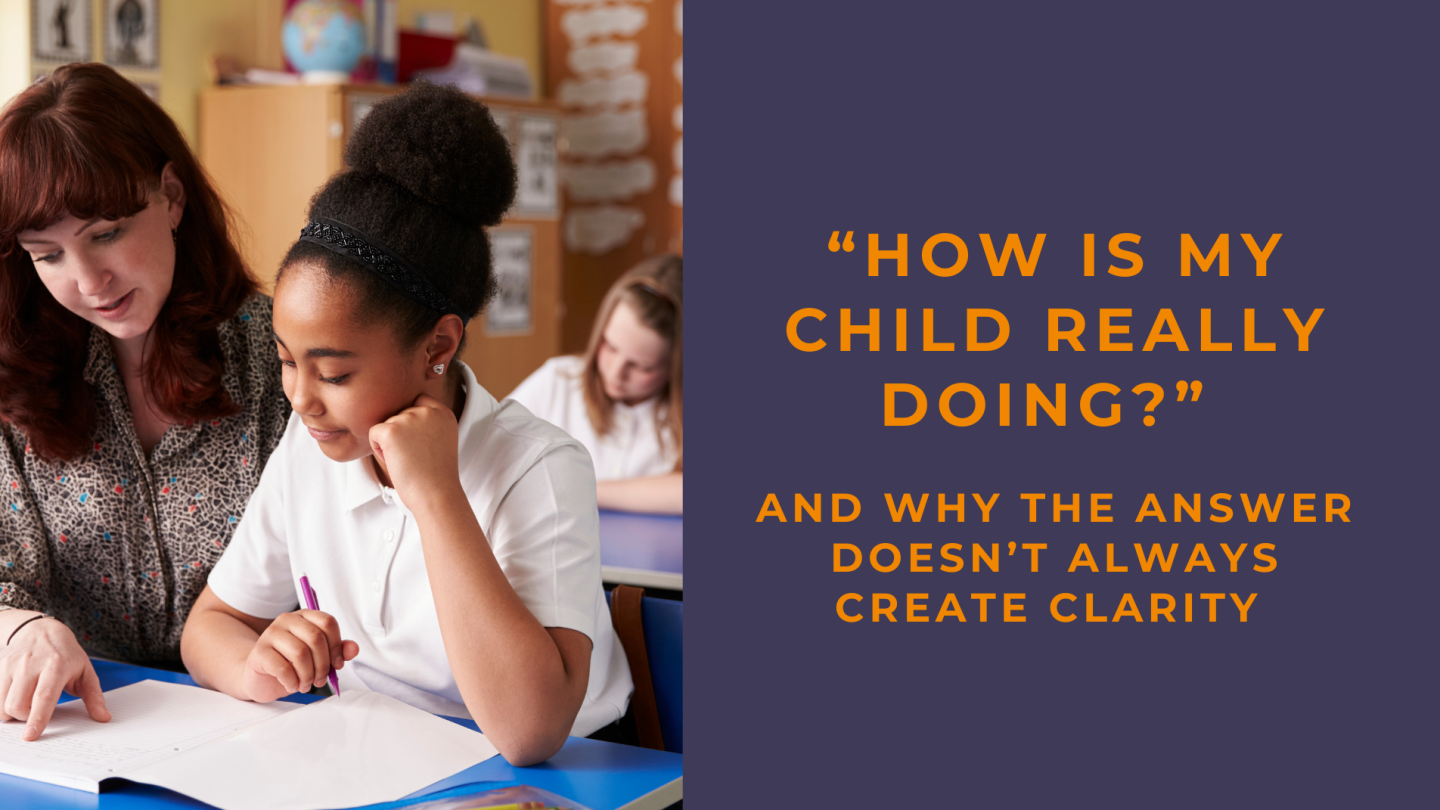
What our research shows about feedback and where schools can focus their efforts
Drawing on our proprietary research across the independent sector, including large-scale surveys and interviews with thousands of parents, one issue stands out with unusual consistency: how parents experience feedback on their child’s progress.
In around 80% of our parent surveys, it emerges as a top priority for improvement.
This is not confined to one phase. It spans the age range, though it is often expressed most strongly by parents of younger pupils. Nor is it a marginal concern. For many families, feedback is the primary lens through which they judge both the quality of education and the strength of their relationship with the school.
At its core, this is not simply a question of communication frequency. It is a question of confidence.
Parents are asking, in effect: Do we understand how our child is really doing, and can we trust that the school will tell us early if something needs attention?
At the same time, school leaders will recognise the practical constraints. Teacher workload is already under pressure, systems are often complex, and fully bespoke, high-frequency reporting is neither realistic nor desirable.
The issue, therefore, is not how to do more, but how to ensure that what is already in place carries greater clarity and confidence for parents.
Across our research, the pattern is consistent: dissatisfaction rarely stems from a lack of information, but from a lack of clarity about what that information actually means for their child.
What sits beneath parental expectations
When analysed across datasets and schools, parental feedback on this topic is remarkably consistent. Rather than a long list of disconnected requests, the same underlying expectations recur across contexts.
1. Regular, timely communication
Parents are not seeking constant updates. However, reliance on a small number of formal reporting points creates risk, because when communication is episodic, issues can feel sudden rather than managed.
What parents respond to most positively is a sense of continuity: that progress is being monitored and that any concerns will be surfaced in a timely way. This is especially true for parents of younger children. Typical comments include:
“It would be really helpful to keep parents updated on a more regular basis… rather than having surprises in reports or parents’ evening.”
“The short slots at parent’s evenings don’t allow for much discussion. Could the school look at ways to improve communication between teachers and parents throughout the year?”
The underlying expectation is not constant communication, but the reassurance that nothing important will come as a surprise. The goal is to ensure that no parent reaches the end of term feeling they had no visibility of a concern. In practice, this is a shift from a series of planned events to a more continuous sense of dialogue, whether through dashboard reporting, interim updates or more accessible touchpoints.
2. Evidence over general reassurance
Parents consistently distinguish between tone and substance. Positive, supportive language is valued, but without clear evidence it can feel insufficient.
Generic phrasing without data or context (“doing fine” or “no concerns”) is one of the most frequently cited frustrations. Parents are looking for feedback that is anchored in observable indicators of progress and provides enough context to interpret what those indicators mean.
One typical comment illustrates this: “Very little granular detail about progress… the report simply listed exam scores without any context.”
What builds confidence is not more commentary, but more meaningful detail. Parents are explicit about wanting honesty and clarity. They want to know whether their child is performing above, at or below expectations, and in which areas. In the words of one parent “instead of saying ‘he is bright’ or ‘no areas of concern’, give clear, detailed feedback.”
3. Insight into the individual
Confidence is closely linked to whether feedback feels genuinely personalised. Where comments appear formulaic or interchangeable, parents tend to question how well their child is known.
Conversely, even brief but specific references to a child’s work, behaviour or development are highly valued. They signal professional attention and strengthen trust.
This becomes particularly important in senior settings, where parents often look to a form tutor or equivalent to synthesise a “whole child” perspective. As one parent noted: “It would have been nice… to share how my daughter is doing beyond academics.”
When feedback reflects the individual in a credible way, parents are far more likely to feel that the school truly understands their child.
4. Direction, not just diagnosis
Finally, and perhaps most importantly, parents are looking for forward-looking clarity. Parents are not only interested in current performance; they want to understand trajectory. This comes up repeatedly in our research.
They want to know what will happen next, what support will be put in place, and how they can play a role. A typical quote illustrates the point: “More communication with parents on how their child can improve… sharing key pointers on how your child can improve would help us support them at home.”
Without this, feedback answers the question “how are they doing?” but not “what happens next?”
Where confidence is most often undermined
Across schools, similar patterns tend to weaken parental confidence. These are rarely the result of major structural issues, but of smaller, cumulative inconsistencies.
- Delayed communication is one. Parents are generally pragmatic about challenges, but far less comfortable with discovering them late.
- Ambiguity around responsibility is another. Even in well-organised schools, parents are not always clear who holds oversight of their child’s overall progress.
- Consistency also matters. Variation in the quality of feedback between teachers is quickly noticed and can influence wider perceptions of the school.
None of these issues are typically structural failures. They are more often the cumulative effect of small inconsistencies in timing, clarity and ownership.
Differences by phase
While the underlying expectations are consistent, it is helpful to recognise how their emphasis shifts across the school journey.
In prep and junior years, feedback is closely tied to reassurance. Parents are looking for visibility: that their child is known, settled and developing. Brief, specific insights often carry more weight than longer, less frequent reports.
In senior years, the focus moves towards clarity and trajectory. Parents want to understand how current performance connects to future pathways. The strongest senior phase feedback connects the dots between effort, outcomes, strengths, subject choices and the future.
Regardless of phase, early visibility supports confidence more effectively than retrospective explanation. In other words, “We just want to know how they’re really doing.”
Where schools can focus their efforts
The practical question for schools is where to focus effort in a way that is both effective and sustainable. Our research suggests that improvements in this area rarely depend on significant new systems. More often, they come from refining existing practice.
Common areas of focus include:
- Introducing a mid-point check to reduce the likelihood of surprises, particularly for new joiners
- Making more effective use of data already collected, so that progress is visible and interpretable
- Supporting staff to provide feedback that is specific and evidence-informed, through shared expectations and examples of effective practice
- Ensuring that each feedback point includes a clear next step
- Clarifying who holds the “whole child” overview for parents.
In our experience, these are not high-burden interventions. They are targeted adjustments that improve clarity, consistency and, ultimately, parental confidence.
A final reflection
The strength of feeling around feedback that we see in our research is not about volume of communication. It reflects parents’ need to feel confident that they understand how their child is progressing, that nothing important will be missed and how today’s progress connects to what comes next.
When feedback achieves that, it becomes one of the strongest foundations of trust between families and schools.
When it does not, parents tend to sense the gap early, even if it is not immediately visible to the school.
If you would find it helpful to understand how feedback is experienced in your own school, we can design and deliver tailored parent research and place your findings in the context of our wider sector benchmarks, helping you identify where small changes could make the greatest difference.
Contact us at info@rsacademics.com or share your details here.