A successful leadership appointment is usually seen as a match between a candidate and the requirements of the role.
In international appointments, these requirements can be many and various. Some will be tangible and even non-negotiable and externally-regulated – levels of experience and qualifications, for example. Others will relate to the priorities and challenges of the role. Some requirements may be clearly articulated in a person specification; others may be less easily described.
Equally, candidates will have their own professional expectations. When we speak to candidates, we consider where they are in their career and what they are seeking next. They may have a specialisation in mind or a gap to fill. At Principal level, divergent pathways are becoming more possible as the sector diversifies further: some candidates are more interested in roles where they can focus on being an educational leader, while others seek a wider range of responsibilities.
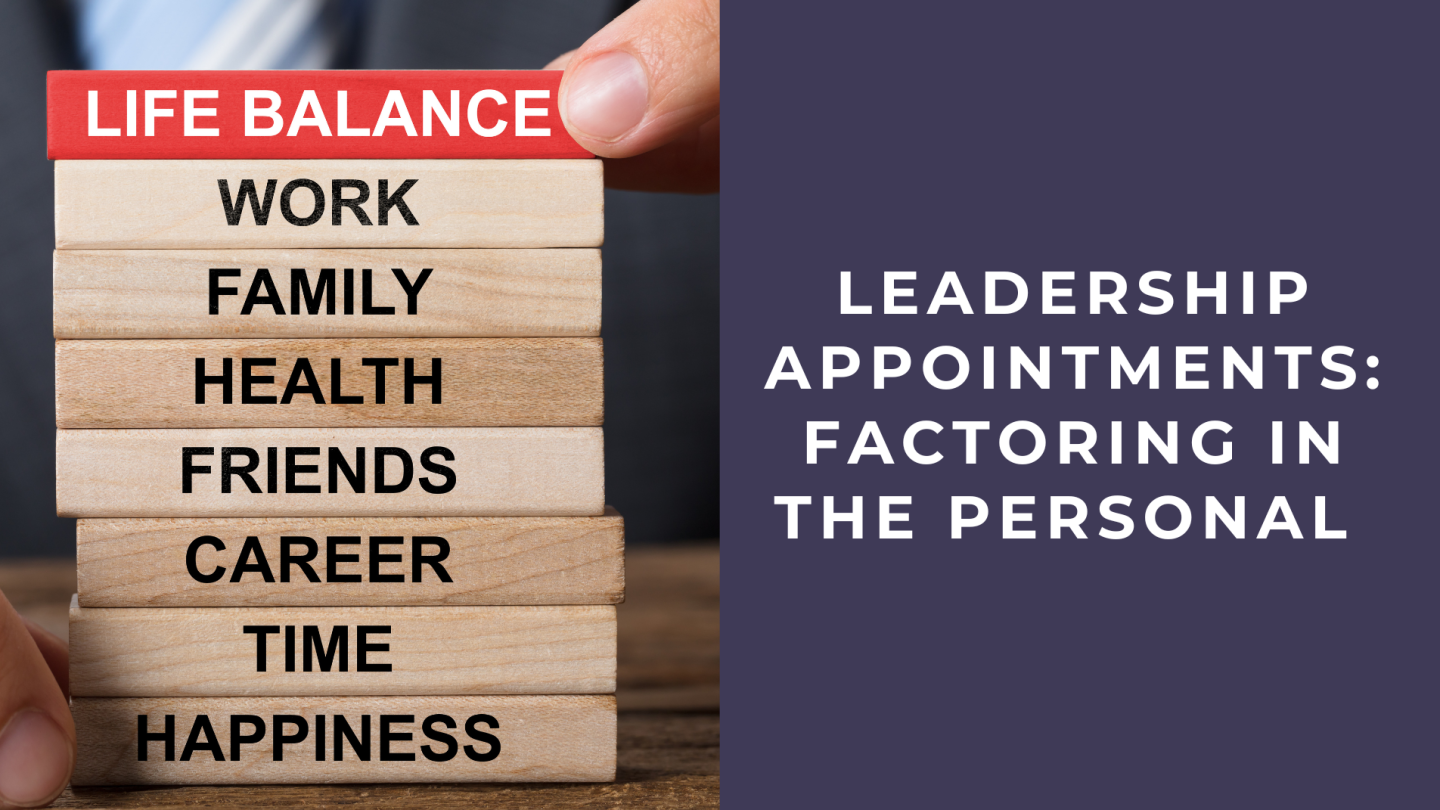
This is all about the professional match. But there must always be a personal side. Many candidates seem on less comfortable ground here. Some do not take enough account of personal and family alignment, which can quickly lead to appointments not working out. Others swing the other way, unintentionally overplaying their hand and overstating their intentions. One common trap is translating expectations from one role onto another without recognising that they can be met in different ways.
This article explores some of the personal dimensions. It deliberately does not discuss navigating the package – that is for a future article.
The unambiguous factors
Some personal dimensions of an appointment will be obvious. A school may be in a remote location and a family will require resourcefulness and self-sufficiency. There may be visa-related restrictions that will rule a candidate out: age, most typically, but it is always worth looking at any health-related exclusions – and how many candidates know that you cannot lead in some countries with a theology degree?
Sometimes, candidates will have their own clear lines: family circumstances mean they don’t want to be more than an X-hour flight from home, or they have ruled out certain areas on safety or other grounds, or they can move this year but not next year because of a child’s education. And let’s not forget the most common of all: can we take our dog?
These are the easy ones. Most of the personal influences on decision-making are much more ambiguous.
The importance of feeling comfortable
Personal circumstances and requirements need to be discussed during the process – another reason why informal conversations with recruiters are so important. Getting issues on the table early saves time and perhaps also emotional commitment. But even then, a real assessment of some issues may only be possible at an in-person final interview stage. We are never wholly comfortable when there is not a final stage in the school. We all had to work that way during the pandemic, and decision-making felt riskier as a result.
Final stages really are two-way affairs. A school gets to see candidates in the round, in various scenarios, engaging with different stakeholders and in the specific cultural context. But the candidate can start to visualise what life would be like – the reality of the school, of course, but also the domestic arrangements. Can they imagine their family being comfortable and enjoying life there? It’s not always possible, but better still if a spouse or partner is there to help make that decision.
I remember one final stage many years ago when the preferred candidate withdrew before boarding his flight home. It was an emotional decision because the job was an outstanding opportunity for him, but he and his wife simply could not see themselves living in that location. They had needed to see and feel the place to make that decision. It was a good outcome: better to make the decision then than three months in (and there was another eminently appointable candidate who served the school well for many years).
The Family Fit
One candidate recently put the importance of family nicely: ‘I’ll only be able to do the job I know I can do if I feel sure my family are happy.’ Conversely, it is not uncommon to hear; ‘My husband/wife/son/daughter just didn’t settle.’ There is much more to this question with an international move than when moving within a country.
Schooling options may be an important factor if a child’s age group is not covered by the school. What are the options, where do other staff children go and is transport organised?
At a final stage, there should be a chance to view accommodation options. Is there a set accommodation option or does an allowance enable a leader to weigh up convenience, comfort, lifestyle choices and safety? Where do other staff live – and can you speak to them about their experiences? But respect the location. One candidate made a fuss about accommodation being in an apartment when his family was accustomed to a house – in a society where almost everyone lives in apartments.
It is perfectly usual in some countries for a Principal to have a car and driver; it is absolutely not the case elsewhere. There is no right or wrong and this is a good example of why it can be problematic to carry expectations from one role to another. If you prefer to have a driver, then perhaps you should be looking in a location where that is the norm.
A partner’s expectations of employment is a factor for some – whether in the school (sometimes this is not permitted), in another school or elsewhere. Occasionally, a school may be able to offer options, but that should not be taken for granted. Realistic expectations are important. Sometimes we hear: ‘Oh, he/she has a business that is largely online and they can work anywhere.’ But can they? Because we also hear: ‘He/she couldn’t really keep their business going so we have lost an income and need to look elsewhere.’
Cultural alignment
Aligning with the school culture is worth a whole separate article. The issue here is alignment with the host culture. Some of that can be researched in advance, some of it needs a visit.
An example may best illustrate the point. This concerns an experienced leader at a final stage in China. Although he had worked in diverse countries, some of them very challenging, he had never worked in China. He was noticeably uncomfortable: he showed little curiosity when we were on a tour, he would be the first back in the vehicle when we moved on, and he seemed uncharacteristically offhand with local people he encountered. When we talked later, he described his surprise at how uncomfortable he had felt. If the school had ignored the red flags, he should probably have decided it was not right for him. It is unlikely he would have been happy.
Curiosity can be a good indicator of alignment – how interested does a person seem in the surroundings, what questions do they ask, are they keen to see more, how do they relate to staff from the country. That’s something for a school to observe. But it’s also for a candidate to weigh up – how would they, and their families, feel, if they were immersed in the society. If it doesn’t feel right, then maybe that should be heeded.
Opportunities to develop
Schools are far from equal in their approach to professional development. Even when there is decent provision for teachers and staff, the idea of a senior leader’s continuing development may be off the radar. In part this can be is a cultural issue – if a school supports the leader’s development, won’t they soon fly the nest? Senior leaders will understandably want to know that there are opportunities to develop – will they will have access to coaching or mentoring, or time to participate in sector or regional networks, or to maintain inspection or accreditation commitments? Some groups and schools have impressive PD offers for all staff, and evidence of this on their websites is a positive sign – although its absence is certainly not an indication to the contrary.
A conversation will give you a sense of your room for manoeuvre. But don’t paint yourself into a corner. One recent candidate produced a list of expectations around time for inspection training, support to pursue external qualifications and various other commitments such that even we questioned how much time he actually wanted to spend in the school.
Treat it as a conversation
Moving internationally can be an enormous undertaking for a leader and their family, full of the richest rewards when it works well. There is a lot to factor in.
A position may be the perfect next step in career terms. But if it is not likely to work well for a family, then it will not be so perfect in reality. These are not trade-offs: an international move must be viewed holistically.
Our advice is to start the conversation early so that by the time you apply for a role, you have been able to consider your main concerns. We certainly won’t have been able to give you all the answers, but it is a case of keeping the questions flowing (appropriately) as the process unfolds.
Don’t overdo it so that your legitimate questions come across as though you are setting your own high price. But do take advantage of the informal earlier conversations, and then the final stage when you get that far. It really must be a two-way thing. A school wants maximum confidence in its decision. But you also need to be confident as you picture yourself and your family in the school, in the country, the city, the apartment complex, at the mall or the market, in the gym, at a restaurant. There are always risks but the best processes will give you chances to investigate them. The most successful school leaders will be happy professionally because they will be settled personally.